

 Stories
January 5, 2026 • 2 min read
Aisha Bwenene, a 51-year-old mother of five from eastern Uganda, saw her family’s routines and priorities change after joining the INSPIRE project’s Participatory Integrated Planning (PIP) learning approach. What began as household discussions on goals and cooperation soon led to improved farming practices and stronger family unity. With better access to quality seeds and practical agronomy training, her maize production increased fourfold within one season. Today, her family benefits from improved food security, growing poultry production, and a shared plan.
Before joining GOAL’s INSPIRE project, Aisha Bwenene and her family faced ongoing challenges at home. Living in Bupadhengo Parish, Nawanyago Sub-County, Aisha struggled to keep her household focused and economically stable. Daily life lacked structure and long-term planning.
Household tensions were part of everyday life. “We were not united as a family. Everyone was doing their own thing,” Aisha explains. The situation affected not only family relationships but also their ability to plan for farming, income, and their children’s well-being. With limited coordination and unstable habits, productivity remained low, and opportunities were often missed.
Learning Together and Farming Differently
A turning point came when Aisha and her family began attending PIP learning sessions under the INSPIRE project. For the first time, they sat together to discuss their priorities, goals, and the future of their household. The sessions emphasised trust, shared responsibility, and joint decision-making.
Through pathway two of the project, Aisha also received 11 kilograms of maize seed along with practical training in improved agronomic practices. These included land preparation, correct planting techniques, use of mineral fertiliser, pest and disease management, and soil and water conservation.
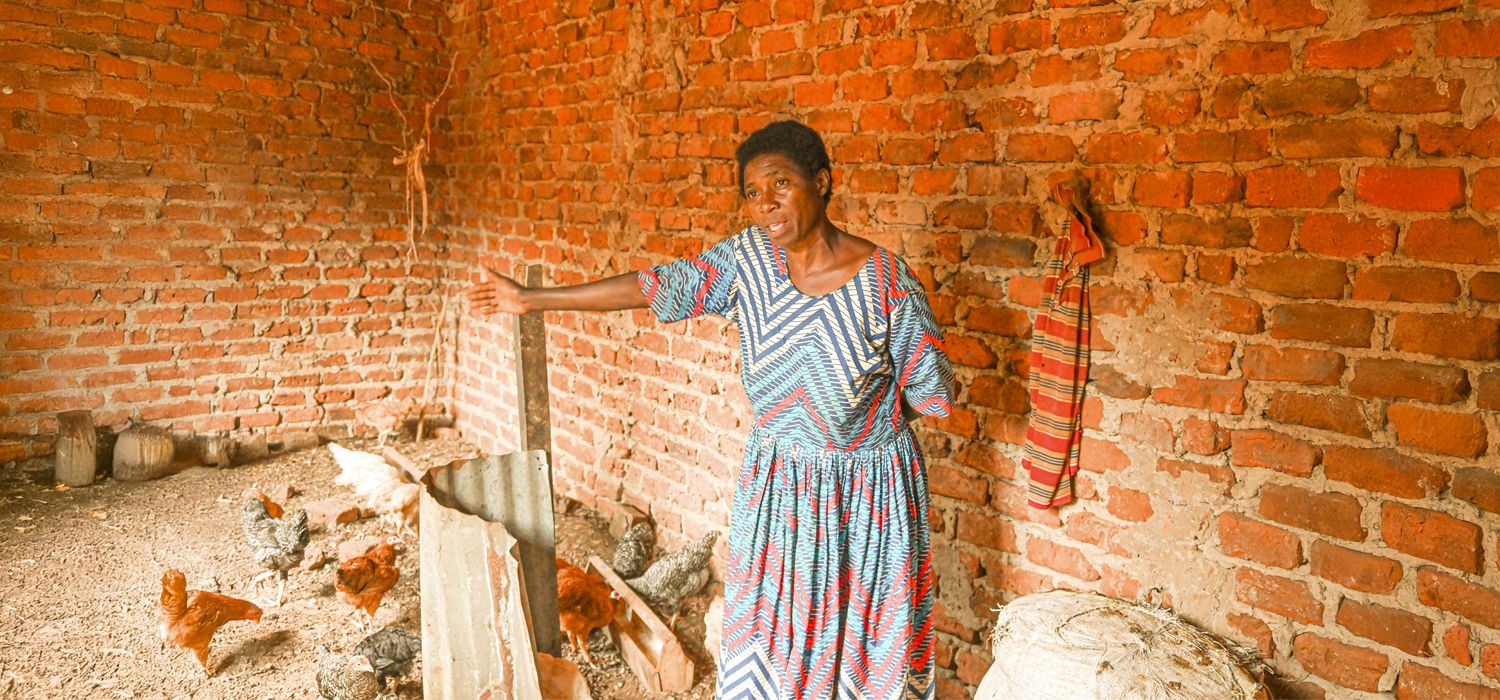
Applying these methods, the family harvested 600 kilograms of maize from just half an acre, up from 150 kilograms previously on similar land. Rather than selling the maize, Aisha made a strategic decision to use it as feed for their poultry. As a result, the family’s flock grew from 100 to 300 SASO birds.
Food Security, Income, and Family Unity
The benefits extended beyond maize production. Aisha and her family began composting with poultry manure to improve the productivity of their horticultural crops, including tomatoes, eggplants, green peppers, and cabbage. They also introduced mulching in their banana garden and dug contour trenches to reduce soil erosion and retain moisture.
These changes have strengthened food security and created more reliable sources of income. “Now we plan together and work together,” Aisha says. “We see farming as a business and our home as a team.”
Today, Aisha actively manages her poultry and farm, contributing directly to her household’s stability and growth. Her experience points to wider changes among families, with INSPIRE’s PIP approach fostering practical skills, stronger relationships, and more secure livelihoods.
